yearn
The miracle that better lead to rotisserie chicken.
A few weeks ago, I went to the library to pay a fine for a lost book. There was a new librarian who, before he was a librarian, attended my twenty-seventh birthday party.
The party was at my apartment, and it was really nice, except for when that guy came up to me and said that all my friends would leave me and I would never be happy. I think he was doing negging because he seemed confused when I never spoke to him again.
It was hard to pay the fine without speaking, so I said only the necessary words and none that indicated he had ever been inside my home.
After I paid my fine, he reactivated my library card and used the self-checkout to take out my books.
I read almost all the books, except one that made me nervous for some reason. I put it off until the day before it was due, when I discovered it was wonderful — and would have to go back late.
The Idiot by Elif Batuman follows Selin, a sheltered, cerebral freshman at Harvard, and is narrated so dispassionately that it feels almost pre-human — like someone new to consciousness taking notes on how to be a person.
Selin falls in love with a classmate during a long stretch when they mostly speak by email, and almost never in real life. And I do get it — a good pen pal, hoo-boy — but imagine being eighteen and waiting by the computer for emails like:
“The thing with the Rolexes is amazing, amazing. Light seems to sweep, but quantum theory says it ticks. Waves are the combination of sweeping and ticking. Could true sweeping ever happen on this Earth of ours? Maybe one could do sweeping math, or sweeping sex. Sweeping was beautiful, but powerless. Energy comes from ticking — the capacity for rapid change. Immortality is sweeping. Lives coming and going, generations, years, minutes, seconds: all are on the fake Rolex.”
Or:
“Your atom, I think, it will never go back to peace, to cereal or rocks or anything like that. Once it has been seduced, there is no way back; the way is always ahead, and it is so much harder after the passage from innocence. But it does not work to pretend to be innocent anymore. That seduced atom has energies that seduce people, and those rarely get lost. I summon you words. Oh my stars, without you, there is nothing.”
As I read, I kept thinking: you poor girl. Nothing will ever satisfy you again once you experience love in the form of riddles. I’m kidding. (Kind of.)
Maybe all women have a riddle man in their history. That one guy whose DMs go to the general inbox and don’t get read until some wine-soaked evening, when we scroll through them and laugh — because we still have no idea what he’s talking about, but at least it’s no longer a matter of our very survival to figure it out.
I’ve never known women to speak in riddles the way some men do. Sometimes, I think it’s so there are no receipts. Like the Mad Hatter asks Alice, “Why is a raven like a writing desk?” so that later, if she brought it to HR, they could say, “Hm, seems like he didn’t say anything at all.”
Or maybe they don’t know what to say, so they say a lot of words that don’t mean anything, to make it seem like they do.
Most generously, they might know exactly what they want to say but want to say it more poetically. They needn’t bother. There’s nothing more attractive than someone saying exactly the thing.
“You have bewitched me, body and soul, and I love, I love, I love you. I never wish to be parted from you from this day on.”
And it’s hard to find fault with a well-timed “fuck, I miss you.”
I’ve never felt that naming something clearly diminishes its beauty. If anything, my defining trait is that I’m haunted by vague, squishy sensations — and rather than let them knock on the walls or open my cabinets at night, I call them into the light and give them names.
This isn’t an argument against beautiful language. I love that shit. The classics — I love you, I miss you, I want you — have their own physical thrill. But there’s another pleasure when someone meets you in language — sits down, scans their body, and finds new words for a specific feeling they’ve had because of you. Few gifts are better.
When two people, in good faith, work to articulate a feeling as truly as possible, they invent a private language. That’s the world-building of love. It’s different from using language as a remove — starting with a clear thought and placing a distorting filter over it so someone else has to sit with the ambiguity.
It’s hard enough knowing we’re going to die someday — just not when. We shouldn’t also have to decode what someone means when they say, for example:
“More knowing and more time and more (Which never goes away). Is when we say ‘I’
And it weighs tons (Because we know all the hidden and unhidden complicated and full minds we manage, hide, reveal, master).”
Like, k?

A friend said recently that anyone who can make yearning feel real in art becomes a millionaire. I think she’s right — and that it won’t be me. It’s not a feeling I tolerate well.
I gather I’m in the minority. The hockey show. The summer-the-girl-turned-pretty show. Yearning as the engine. No shortage of fans. The Criterion Channel even has a whole “Yearning” collection this month, full of films I’ve seen that have already hurt my feelings.
Part of the problem is that I don’t experience much separation between art and life. What happens in a story happens in my body. I also have a low tolerance for uncertainty. Spoilers don’t bother me — I look up the plot of nearly everything in advance so I can relax and enjoy it.
Yearning stories are elegant little machines that ask you to sit in not-knowing. Distance and misunderstanding are stretched to their tensile limits, for maximum tension.
Because these stories live in anticipation, desire stays pure. It’s never made to survive anything as buzz-killing as the day-to-day. You get the falling-in-love feeling without what comes after. That’s entertainment.
I’m being a little insincere here. It’s not their distance from reality that puts me off. I like superhero movies, for crying out loud!
But I’ll still point out — just to be a lil devil — that when our best love stories end at the kiss, the marriage, the moment of contact, we’re left without a model for romance in progress. For love in the middle. For love that survives contact with time.
Let’s say, hypothetically, that I’m an idiot and need movies and art to tell me what moment of being a person I’m in. If the only delicious love stories are about beginnings, what’s an idiot supposed to do when they’re in the middle of something? Consign themselves to the divorce movies?
It would be nice if art could relieve us of the fatalism that says the beginning is the best part and everything else is just a slow souring. Is that too much to ask?
This is why I like Phantom Thread. There’s a beginning, but it isn’t the most romantic part. That happens in the murky middle: surviving contact, negotiating the terms of their pathologies. A dance of small compromises — steps forward, steps back, tantrums, someone matching someone else’s freak — a love story that feels weighty and earned in a way stories that end at the beginning never could.
Like anyone who’s ever unboxed a Barbie, I appreciate anticipation. I’m just wary of the style of love story that asks the body to stay in a state of readiness for something that may never arrive. For me, that kind of nervous-system hover isn’t romantic — it’s corrosive, bottomless, impossible to background.
I like my romance like I like my coffee — hot in my hands. What good is hypothetical coffee?
I’m genuinely in awe of the people who seem to tolerate yearning so easily. Are they sturdier? Or just care less about the outcome? Imagine noticing you’re yearning, thinking hm, how interesting, and then getting on with your day. Incredible stuff.
When I reached the part of The Idiot where Ivan emails Selin with the subject line “goodbye Selin,” recognition came in two waves. First: that (duh) I was inside a yearning story. Second — quieter, more familiar — that I’d been here before.
Ivan writes:
“You should get over this and these wild dreams of atoms, sparks, Rolexes, and everything else. Let it not create destruction, but growth and life for the future.”
Selin’s reaction was immediate:
“I started to walk around the room, dazed with pain. I had no idea what to do with myself. I couldn’t imagine how I was going to dispose of my body in space and time. Every minute or every day. For the rest of my life. I didn’t understand how he was okay with never seeing me again. More painful and incomprehensible still, he had—with no warning and for no reason I could see—taken back what he had said about the atom: that it was allowed to come out and play and be a crazy spark and lie on his fingernail. He had called me, and now he was sending me into a rock…I reread what he had written now: that I had to get over the wild and crazy dreams, abandon destruction, and build life for the future. He meant that I had to go away so that he could build a life for the future.”
Oooh. Ouch.
Woe is she who finds herself yearning for someone who isn’t. Faced with that asymmetry, the mind looks for order. It settles, inevitably, on the simplest explanation: you loved more. You were easier to leave.

I used to take emotional discrepancies personally. If other people seemed to manage yearning with ease and I didn’t, I assumed I lacked some basic discipline.
Now I think: some things just hit some people differently.
Most cultural advice assumes comprehension is corrective: you recognize it’s over, you release it, and the body follows.
For some bodies, attachment doesn’t auto-eject on command. Understanding doesn’t end the feeling. Safety does. Rest does. Time does. Inquiry does — the slow work of asking why. For those bodies, yearning is metabolically expensive.
On the other hand, the sensitivity that makes yearning costly may be the same part that’s responsible for aesthetic perception and emotional precision. Pretty good shit!
Not character. Cost.
Some bodies pay more — even for art. And the bill isn’t transferable.
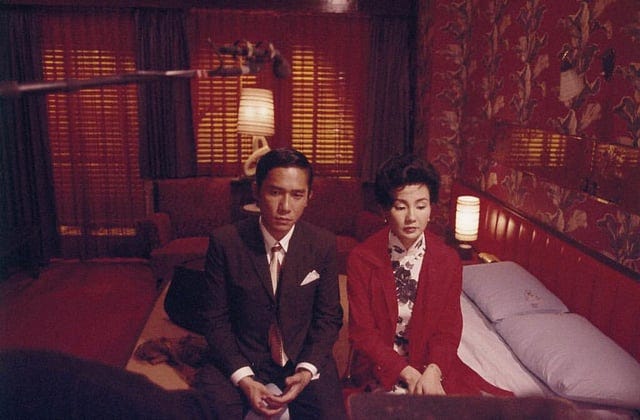
Here is an example of what I mean:
After I watched Star Wars: The Rise of Skywalker in theaters in 2019, I was genuinely not okay.
In this movie — yes, the one with Happy Meal toys — Kylo Ren and Rey are adversarial equals with a strange psychic connection that lets them see and feel each other across space. There’s tension you don’t clock as sexual at first, because for a minute, you think they might be twins. When you find out they aren’t, you’re like, oh — sick, definitely kiss then.
They hunt each other across the galaxy. They fight in the rain. They make broody eye contact. One of them is very tall. Eventually, Kylo redeems himself, saves Rey, they share one pretty cool kiss — and he immediately drops dead.
For days afterward, I couldn’t get over it. How was I supposed to feel satisfied after yearning alongside them, only to watch their triumph last five seconds? How is she supposed to find another love when her last one was literally the other half of her Force dyad — and he died before she even had the chance to find one annoying thing about him?
I was so messed up, I turned to Star Wars fan fiction: crudely drawn illustrations of them having sex on a spaceship, or stories where they just hang out eating ice cream. I needed to feel like it hadn’t all been nervous dysregulation for nothing.
I don’t seem to have a way, inside my body, to understand love without one. I want to be into vapour and myth like all the cool people, but I’m wired for contact. Maybe the most earthly thing about me is how badly I crave the weight of a thing.
That’s why I’m unsettled by stories where yearning never culminates in a life. The love feels unconsummated if I can’t imagine the characters having hungover sex in the afternoon, then going to the grocery store for a rotisserie chicken. Coming home from a party and realizing they still have to put the fitted sheet back on the mattress. Painting a kitchen. Getting a stomach bug on vacation. Sneaking canned wine and cannoli into the movies.
If the love never enters a life, it’s electricity with nowhere to ground. It flickers and flashes and then the story ends, and we’re left holding static. It stays immaculate and immaculate love is terrifying.
That’s why I invent alternative endings. The idea that the people with the big love never get to live inside it — never get to hold it easily — is too painful to metabolize.
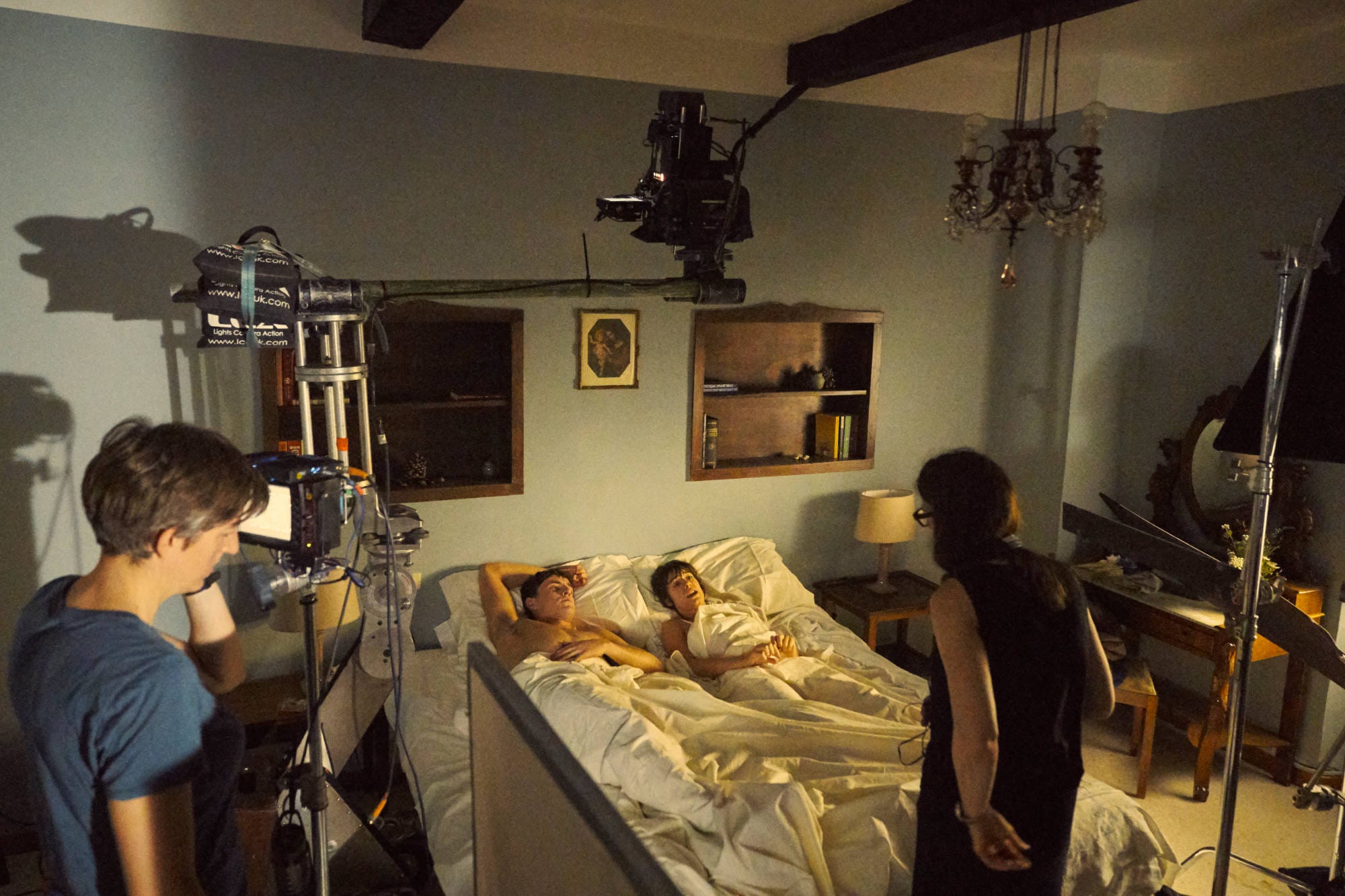
There’s a point toward the end of The Idiot where you accept the book’s going to be wall-to-wall yearning. You even feel delighted by a scene where the narrator gets herself off with the shower head — because at least she’s thinking about the guy when she does it.
By then, it comes as no surprise when she goes to a train station at night to call him from a pay phone, loses her nerve, and calls her friend Svetlana instead. Svetlana has just come back from a trip with a pretty meh guy but she describes it like this: We were each overwhelmed by the ecstasy of the other’s presence.
She says, “When you think about the infinity of galaxies and the combinations of DNA, and against all those odds, you meet this person. It’s a miracle. I wanted to prostrate myself in every church.”
Selin outwardly says, “Right.” But internally:
I couldn’t imagine viewing Bill’s presence on earth as any kind of a miracle, but wasn’t that itself the miracle — that love really was an obscure and unfathomable connection between individuals and not an economic contest where everyone was matched up according to how quantifiably lovable they were?
Oh shit. Is this it?
That to find someone worth yearning for is wildly improbable and yet possible — the galaxies, the DNA, the odds — and somehow there is a person. A specific one.
It can happen. It has.
Of course we tolerate the stomach ache. Of course we return to it in stories. Even if we believe it would be better lived inside a life, we can’t help but stand in awe of the miracle.
Dear Valentine,
Don’t risk your peace on bullshit. You know the kind I mean.
But if you find the biggest feeling — name it. Shake the tree. Bring it down. Hold it. Carry it home into the thunderdome of feelings. Try. Fail. Know the cost.
It doesn’t matter if you pay more for it than somebody else. It’s none of your business what negotiations take place in another person’s heart.
Did Heathcliff and Catherine really love each other, or were they just trying to regulate their nervous systems?
Don’t worry about it, honey. They’re ghosts.